Is it possible to have a lush, coastal look in La Jolla without high water bills or constant upkeep? Absolutely. You can design a beautiful, resilient landscape that fits our ocean breezes, salt spray, and long dry spells while boosting curb appeal and long-term value. In this guide, you’ll learn what works here, from smart plant choices to permeable hardscape and rebates worth checking. Let’s dive in.
La Jolla microclimate basics
La Jolla is a patchwork of microclimates. Matching plants and materials to your exact exposure saves water and reduces maintenance.
Oceanfront and bluffs
Homes right on the coast see the most salt spray and steady winds, plus cooler daytime highs. Choose low, flexible, and salt-tolerant plants and keep delicate specimens in protected pockets. Hardscape should be stable and permeable to handle mist and runoff.
Nearshore neighborhoods
Most La Jolla streets enjoy moderate temperatures with variable winds. You can mix natives, Mediterranean shrubs, and succulents. Still, group plants by sun and water needs, and position wind buffers on the property’s windward side.
Canyons and slopes
Sheltered canyons are warmer and drier in summer with less salt and wind. Many plants thrive here, but irrigation needs can increase due to heat. Stabilize slopes with deep-rooted natives and permeable pathways to control erosion.
Soils and drainage tips
Many coastal lots sit on sandy or sandy-loam soils that drain fast and hold fewer nutrients. That is great for most drought-tolerant species, but new plants still need help during establishment.
- Add modest compost at planting to boost soil biology without creating soggy pockets.
- Plant slightly high to encourage runoff, not pooling.
- Use a 2 to 3 inch mulch layer to reduce evaporation and weeds. Keep mulch away from stems and trunks.
Design principles that save water
- Layer for protection. Use low groundcovers, mid-height shrubs, and small trees to deflect wind and filter salt.
- Favor salt-wise leaves. Waxy, hairy, or small leaves and succulent forms reduce salt uptake and water loss.
- Group by hydrozone. Keep plants with similar water needs on the same drip zone for efficient irrigation.
- Repeat for impact. Massed plantings look intentional, photograph beautifully, and are easier to maintain.
Coastal plant palettes that thrive
Drought-tolerant does not mean zero water. Most plants need regular irrigation for 1 to 2 years to establish deep roots. Choose species by your exposure and scale the mix to fit your home’s architecture.
Groundcovers and low plantings
- Dymondia margaretae (Dymondia). Tough, low, and clean edging or lawn alternative in sunny spots.
- Native bunchgrasses like Leymus condensatus ‘Canyon Prince’ and Muhlenbergia rigens (deergrass) for texture and movement.
- Succulents such as Sedum, low Echeveria, and Crassula for tidy mats and rosettes in coastal sun.
- Avoid invasive ice plant (Carpobrotus) near natural areas. Choose noninvasive alternatives instead.
Shrubs and mid-height structure
- Native coastal scrub: Artemisia californica, Salvia mellifera, Salvia spathacea, and Baccharis pilularis for habitat value and fragrance.
- Mediterranean accents: Lavandula (lavender), Salvia rosmarinus (rosemary), Santolina for tidy forms and pollinators.
- Salt-tolerant screens: Dodonaea viscosa (hopbush). Use Leptospermum in suitable, sheltered areas and verify local appropriateness.
Accents and succulents
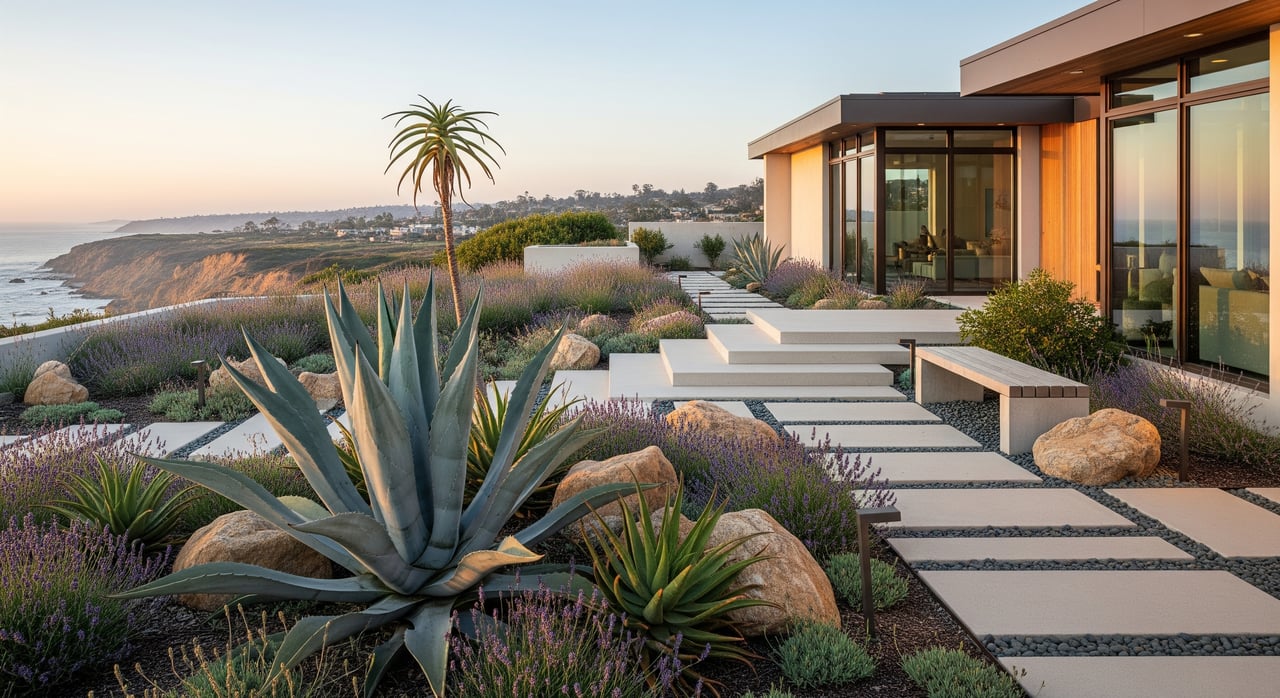
- Agave, Aloe, Aeonium, and select Euphorbia add sculptural form. Use a few focal specimens and scale to the space so they do not overwhelm paths or windows.
Grasses and seasonal color
- Native grasses: Muhlenbergia rigens, Nassella pulchra for movement and drought endurance.
- Perennials: Eschscholzia californica (California poppy) and Eriogonum (buckwheat) bring long bloom windows and pollinator support.
Small trees and anchors
- Arbutus ‘Marina’ offers evergreen structure, bark interest, and manageable size in coastal settings.
- Consider Olearia or sheltered Lagerstroemia (crape myrtle) for summer color.
- Use larger natives like Quercus agrifolia thoughtfully due to scale and root spread.
Permeable hardscape ideas
Smart hardscape improves curb appeal and helps meet local stormwater expectations. Permeable choices also recharge soil moisture and reduce runoff.
Paths and patios
- Stabilized decomposed granite makes warm, coastal-style walkways and small patios that let water infiltrate.
- Gravel or crushed stone with edging is excellent for low-traffic areas and side yards.
- Permeable pavers deliver a polished entry or courtyard look while managing stormwater.
Driveways and parking
- Permeable interlocking concrete pavers are engineered to support vehicles and store runoff in the base.
- Porous concrete or asphalt can work for larger driveways with proper design and subgrade prep.
Rain capture and reuse
- Rain barrels and cisterns help offset irrigation needs. Size systems to roof area and seasonal rainfall.
- Direct downspouts to bioswales or rain gardens where soils and site design allow, keeping water on site for plants.
Irrigation upgrades that pay off
- Convert spray zones to drip or micro-irrigation with pressure-compensating emitters.
- Install a smart controller that adjusts watering by weather or soil moisture.
- Use check valves and pressure regulators to prevent low-head drainage and protect emitters.
- Inspect and flush lines seasonally to keep systems efficient.
Establishment and maintenance
Drought-tolerant landscapes are designed to be low-maintenance, not no-maintenance. A light routine keeps everything healthy and show-ready.
Soil prep and mulch
- Blend in compost modestly at planting, then top with 2 to 3 inches of mulch.
- Use gravel mulch around succulents to avoid rot and highlight form.
Irrigation schedule
- First 3 months: frequent, light watering to settle roots and prevent stress.
- Months 4 to 12: deeper, less frequent watering to train roots down.
- Year 2 and beyond: occasional deep watering during extended dry spells, especially before heat waves.
Seasonal care
- Prune lightly for form after flowering. Avoid heavy shearing that ruins natural shapes.
- Refresh mulch annually and spot-weed before seeds set.
- Check for salt burn on windward edges and replace sensitive plants with more tolerant choices if needed.
Curb appeal upgrades for sellers
Small, strategic improvements can create a big impression and support a stronger sale.
- Remove tired turf and replace it with a cohesive drought garden that frames your entry.
- Add a focal specimen like a sculptural agave or Arbutus ‘Marina’ near the approach to the front door.
- Retrofit irrigation to drip and install a smart controller. Save utility summaries to show buyers.
- Build a clean, permeable path from curb to door. Keep sight lines open and lighting subtle but effective.
- Refresh mulch, edge beds, and add a few seasonal color pockets for photos and showings.
Document upgrades, plant lists, and any rebates. Buyers appreciate the maintenance plan and cost savings story.
Permits, rebates, and hiring pros
In La Jolla, rules can vary by location and project scope. When in doubt, check with City departments early.
When permits may apply
- Turf removal alone typically does not need a permit.
- Grading, retaining walls, driveway changes, and drainage modifications often require permits.
- Homes near the shoreline or on bluffs may need coastal review or a Coastal Development Permit. Confirm setbacks and erosion protections before you begin.
Rebates to explore
- Turf replacement incentives, high-efficiency irrigation equipment, and smart controller rebates are commonly offered. Program availability and amounts change over time.
- Some agencies offer rain barrel or cistern incentives. Check your water provider for current programs before buying materials.
Hiring the right help
- For major hardscape, irrigation installs, or grading, hire a licensed professional with coastal experience and verify the appropriate license.
- Choose reputable nurseries and avoid wild-collected plants. This protects local ecosystems and ensures plant quality.
Quick action checklist
- Map your microclimates: wind, salt exposure, sun, shade, and slopes.
- Pick a simple palette by zone: groundcovers, mid shrubs, and one or two focal specimens.
- Convert spray to drip and add a smart controller.
- Replace turf with permeable paths plus low-water plantings.
- Add a 2 to 3 inch mulch layer and tidy edges.
- Check rebates with your water provider before purchases.
- Verify permits if changing driveways, drainage, or working near a bluff.
- Keep a one-page maintenance plan with plant list, hydrozones, and irrigation schedule for you or the next owner.
A well-planned, drought-tolerant landscape in La Jolla does more than save water. It elevates your coastal lifestyle, reduces weekend chores, and creates confident value when it is time to sell. If you want help prioritizing upgrades with the highest impact for your home, reach out to Valerie Zatt. You will get local expertise, a clear plan, and resources to execute beautifully.
FAQs
Will a drought-tolerant yard in La Jolla look dry and sparse?
- No. When you use layered plants, texture, and seasonal color, drought gardens feel full and inviting while using far less water.
How long until drought-tolerant plants need minimal water?
- Most require regular irrigation for 1 to 2 years to establish; then occasional deep watering during extended dry periods is usually enough.
Are succulents good for oceanfront homes with salt spray?
- Many succulents handle salt well, but it varies by species and exposure. Keep low, wind-tolerant types on exposed edges and place delicate varieties in sheltered areas.
Do I need a permit to remove lawn or add permeable pavers?
- Lawn removal usually does not need a permit. Retaining walls, grading, driveway changes, or drainage modifications can trigger permits, and coastal sites may require additional review.
Where should I buy plants for a coastal landscape?
- Shop reputable nurseries, especially those with native selections. Avoid wild-collected plants to protect local species and ensure quality stock.